Hwæt! What Makes a Perfect Opening Line?
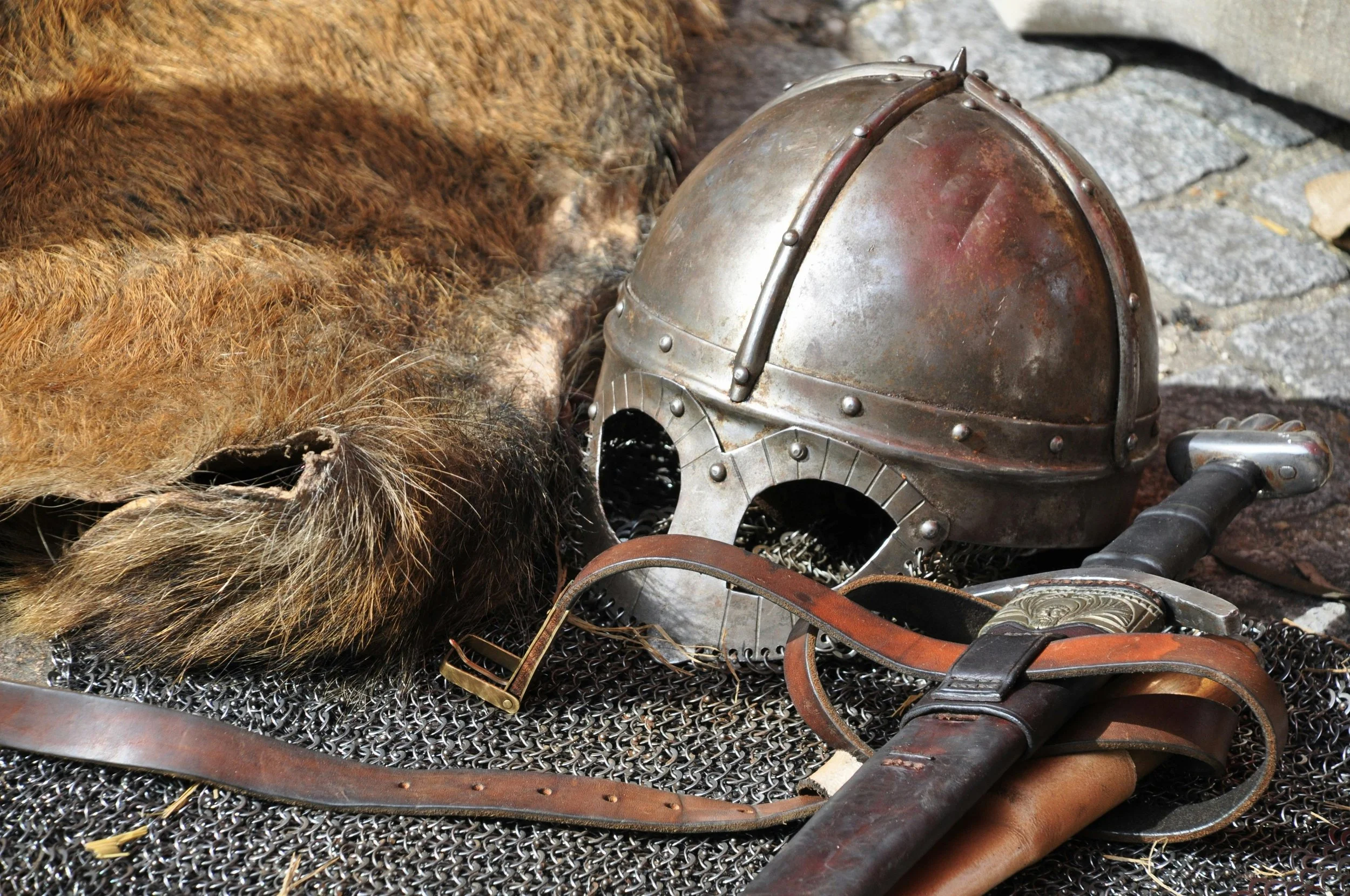
The first line of the Old English poem Beowulf begins with hwæt!, a word that is famously difficult to translate. Attempts at an English rendering include “lo,” “listen,” “so,” or even “bro,” but no English word can quite capture the full meaning of hwæt. Imagine a storyteller getting up in front of a raucous crowd and shouting to get their attention: hwæt! Listen to me. I have a story to tell, and it will be worth your time.
Conventional wisdom says the first sentence of a story is Very Important. English teachers love to tell their students that they need to grab the reader’s attention with their “hook,” which typically results in those students writing a lot of irrelevant and terrible first sentences. Obviously, the actual first sentence isn’t quite as important as your English teacher probably made it out to be. In most cases, the reader is willing to give the author a little more than one sentence before deciding whether to keep reading.
At the same time, I do tend to make a snap judgment based on a book’s opening line. That judgment sometimes changes by the end, of course, but often it doesn’t. Interestingly, the immediate opinion I have of the opening line tends to align with my final opinion of the whole book.
Why is that the case? Because writers understand that opening lines are important, the first page is probably the most carefully edited and picked-over part of the story. If the opening line is poorly written, the writing style doesn’t usually get better. In many ways, the first sentence is a microcosm of the author’s very best work. This also means that opening lines are a great way to workshop the picky little issues with prose that make the difference between someone who immediately comes off as a master storyteller and someone who sounds like an amateur.
I happen to love opening lines. As a kid, I made lists of my favorite (and least favorite) first sentences in literature and thought long and hard about why I liked them (or didn’t). So I’m going back to my roots with this list of opening lines. I’ll analyze each example and then rate it out of five stars, because I love rating things almost as much as I love opening lines. Fair warning—I’m going to be incredibly, incredibly picky.
But first, the metrics. What makes or breaks an opening line?
Good opening lines:
Introduce a character, along with some reason to be invested (mystery, sympathy, etc.)
Tell the reader something concrete (i.e., something that really happened)
Give an accurate sense of the novel’s tone
Are concise and sharply written
Drop us fully into the world
Bad or mediocre opening lines:
Make an abstract claim about the world or human nature
Are obviously (bad) or artificially (worse) trying to grab the reader’s attention
Don’t match the novel’s tone
Introduce a setting, not a character (especially descriptions of weather)
Like almost everything else in storytelling, these are principles more than they are rules. There are many great opening lines that don’t follow these metrics at all. I’ve found that the older the book, the more likely it is that the author will break lots of the “rules” I’ve laid out here—but that doesn’t necessarily make those classic works helpful as models. Charles Dickens gets to break whatever rules he wants because he’s Charles Dickens. For the rest of us, rules and principles will have to light the way.
“A heavy snow was falling, whirling outside the windows and lashing the panes, blocking out light and making it seem closer to midnight than a mere four o’clock in the afternoon.”
—The Wings that Bind, by Briar Boleyn
In general, I’m not a fan of opening lines that describe the weather. Because the sentence doesn’t introduce any hint of character or plot, there’s no question or mystery to catch the reader’s interest and draw them into the next sentence. In fact, the state of the weather isn’t even particularly relevant for the first scene, which takes place entirely indoors. In other words, the opening line doesn’t accomplish anything except to set a dark and dramatic tone.
On top of that, the prose is fairly poor. The sentence is riddled with repetitive -ing verbs (falling, whirling, lashing, blocking, making), which dulls the imagery. The sentence is also overwritten, and could express the same image far more concisely. On a pure prose level, I might take a stab at revising the opening line like this: “Heavy snow lashed the windows and shrouded the castle in midnight darkness, though it was only four o’clock.”
But even if the sentence were prettier, it still wouldn’t be a good opening line, because it has no substance. No character, no plot, no mystery.
1.5/5 stars
“Fear, my father once told me, is simply our realization of our lack of control.”
—The Strength of the Few, by James Islington
This is a great example of how my snap judgment based on an opening line often matches my final opinion of the book. Because I loved The Will of the Many, the first book in the Hierarchy series, I was very excited to open the first page of its sequel. But I was disappointed by the opening line—and, as it turned out, by the rest of the book as well.
When you start your story with an abstract claim about human nature, you run the risk that your reader won’t agree. The first sentence of The Strength of the Few suggests that when you strip fear down to its bare essence, you’ll find our realization of our lack of control every time. But that seems obviously false. Yes, a lack of control leads to fear in many cases, but not always. Sometimes it’s freeing to give up control. On the other hand, you can be perfectly in control—such as in any situation where you have to make a big, life-changing decision—and feel intense fear precisely because you are the one in control.
I actually think Islington meant to say something more like, “Losing control of a situation often leads to fear.” But at that point, it becomes a boring truism. It’s scary to lose control. Well, yes, obviously. In fact, the claim is so obvious that there’s no reason to say it at all.
Even aside from all that, the sentence isn’t especially well-written—for example, the impersonal “our” is repeated twice, which makes the sentence clunky. That being said, the insertion of “my father once told me” does improve the line. It makes the claim somewhat subjective: this is what Vis’s father thinks, not necessarily an objective statement about the world. And in the context of the story, the influence of Vis’s past relationship with his father is incredibly important. All that is almost enough to redeem the opening line, but not quite.
2/5 stars
“Conscription Day is always the deadliest. Maybe that’s why the sunrise is especially beautiful this morning—because I know it might be my last.”
—Fourth Wing, by Rebecca Yarros
This is a pretty good opening line. There’s a whole crowd of Fourth Wing superfans out there who would call it incredible, but I think it’s just pretty good. Here’s why.
To me, it reads as though Rebecca Yarros took all the standard advice about opening lines and tried to generate the Perfect Line that would tick every box. Immediate life-or-death stakes? Check. Concrete? Check. Snappy and fast-paced? Check. Introduces a question about the world? Check.
It also kind of introduces a character, along with a reason to be invested. The speaker is heading into Conscription Day (whatever that is), which is always the deadliest (so the speaker could die!). She’s reflecting on how this sunrise might be her last. We don’t know anything about her yet, but we do know she might die today, and we’re probably interested in what the threat is.
But at least to me, the instant introduction of life-or-death stakes feels hollow. The book is a first-person narrative, so we know immediately that the speaker doesn’t actually die on Conscription Day. And if you remove the “listen up, folks, she could die!” aspect of the lines, there’s not much left. We don’t learn anything substantial or interesting about her, or Conscription Day, or the world except that she might die today, which we already know isn’t true, or else Fourth Wing would be a very short book.
So…it’s a pretty good opening line. Not great, but pretty good.
3/5 stars
“Before Mazer invented himself as Mazer, he was Samson Mazer, and before he was Samson Mazer, he was Samson Masur—a change of two letters that transformed him from a nice, ostensibly Jewish boy to a Professional Builder of Worlds—and for most of his youth, he was Sam, S.A.M. on the hall of fame of his grandfather’s Donkey Kong machine, but mainly Sam.”
—Tomorrow, and Tomorrow, and Tomorrow, by Gabrielle Zevin
I really like this opening line for a few reasons. First, it effectively introduces a character, along with some reason to be invested. We’re immediately told that Mazer invented himself, which piques my interest. How and why did he reinvent himself? What does that mean? Further down, we find out that he went from a “nice, ostensibly Jewish boy to a Professional Builder of Worlds,” which generates even more questions. Then, at the end, we get a little hint as to who a Professional Builder of Worlds might be: Sam spent his childhood playing Donkey Kong.
Also, the sentence deliberately takes us back in time. We start with the latest, and presumably final, version of the character’s identity (Mazer), then go back to Samson Mazer, then go back to Samson Masur, and then finally back to S.A.M., or Sam. This creates the sense of peeling back a character’s until we reach his essence, which is appropriate for a highly character-driven novel like Tomorrow, and Tomorrow, and Tomorrow.
The sentence is a little long, but the length and detail match the tone of the novel. By the time I finish the sentence, I’m curious to learn more about Mazer (or is it Sam?), and I already have a hint of where the novel is heading.
4/5 stars
“At the height of the long wet summer of the Seventy-seventh Year of Sendovani, the Thiefmaker of Camorr paid a sudden and unannounced visit to the Eyeless Priest at the Temple of Perelandro, desperately hoping to sell him the Lamora boy.”
—The Lies of Locke Lamora, by Scott Lynch
I might be a little biased, because I love this book to death. But I’m a huge fan of this opening line.
First of all, the sentence delivers setting, plot, and character all at once. It drops us immediately into the world with enough detail to orient us, but not enough to disorient us. If we’re paying close attention, the proper nouns—Sendovani, Camorr, Perelandro—already hint that we’re in a fantasy version of Italy. As soon as the Thiefmaker of Camorr enters the scene in the main clause, I’m curious to learn more about him. Same with the Eyeless Priest. What is a thiefmaker? Why is the priest eyeless?
But the final clause, in my opinion, is what really makes this opening line great. The Thiefmaker is “desperately hoping to sell him the Lamora boy.” I’m instantly invested. Why is the Thiefmaker so desperate to get rid of this boy? What’s wrong with him?
I won’t spoil the rest of the scene, but the answer to that question also happens to be the main catalyst for the plot. The opening line does basically everything right: it sketches a setting, introduces characters, launches the action, and sets the tone (irreverent with a touch of whimsy). Even better, the content of the opening line continues to be relevant throughout the book. The question “Why does the Thiefmaker want to get rid of the Lamora boy so badly?” is not just a gimmick to catch the reader’s attention. The answer literally drives the whole plot.
5/5 stars
It isn’t as easy for a writer to catch the reader’s interest as it used to be. Back in the time of Beowulf, a storyteller only had to slam down his flagon of wine, jump up on the table, and yell, “Hwæt!” These days, authors have to compete with a million other things that are clamoring for their reader’s attention. Even so, hopefully the tools I’ve laid out help you recognize a great opening line when you see one—even if nothing else will ever hit quite as hard as hwæt.
What are your favorite and least favorite opening lines? Let me know in the comments!
